Brewing FIVE STEPS, AND A 500-YEAR-OLD VESSEL
The rice decides much. The rest is our work.
Omachi gives weight and length, but it is a difficult rice to handle — soft, quick to crack, quick to dissolve. Everything below exists to carry what the grain already holds.
The five steps
Polishing
The outer layers of the grain carry protein and fat that muddy the finish. Omachi is soft and cracks easily, so it is milled slowly, in stages, with the heat watched closely.
Washing and steeping
Rice is washed and steeped in the clear water of the Sunagawa. Steeping time is set in seconds — the water the grain drinks decides everything downstream.
Steaming and koji
Steamed rice is carried to the koji room and sown with mould by hand. Omachi's broad, soft heart lets the mould strike deep, which is exactly why it gives such depth.
Fermentation
Koji, steamed rice and water are built up in stages over four days. The mash ferments slowly at low temperature, tended morning and night for a month.
Pressing and bottling
The mash is pressed, and the sake rested until it settles into itself. Seasonal bottlings go out unpasteurised, straight from the tank.
Brewing in Bizen ware
Before wooden vats appeared some five centuries ago, sake was fermented in earthenware. In 1995 we went back to that vessel. Master potter Togaku Mori entrusted us with 500-litre pots of unglazed Bizen ware, thrown from local Inbe clay and fired for sixty days in a 53-metre climbing kiln.
Unglazed clay breathes. The sake fermented in it comes out with a mellow acidity wound through the umami of Omachi — a texture the steel tank does not give. That sake is called Tenkabito.
A quarter of a century has passed since I was called here as toji. In that time there was the scramble to bring back the rice they called a phantom, and the challenge of brewing in great Bizen pots.
Head brewer (toji), Toshimori Shuzo
The people
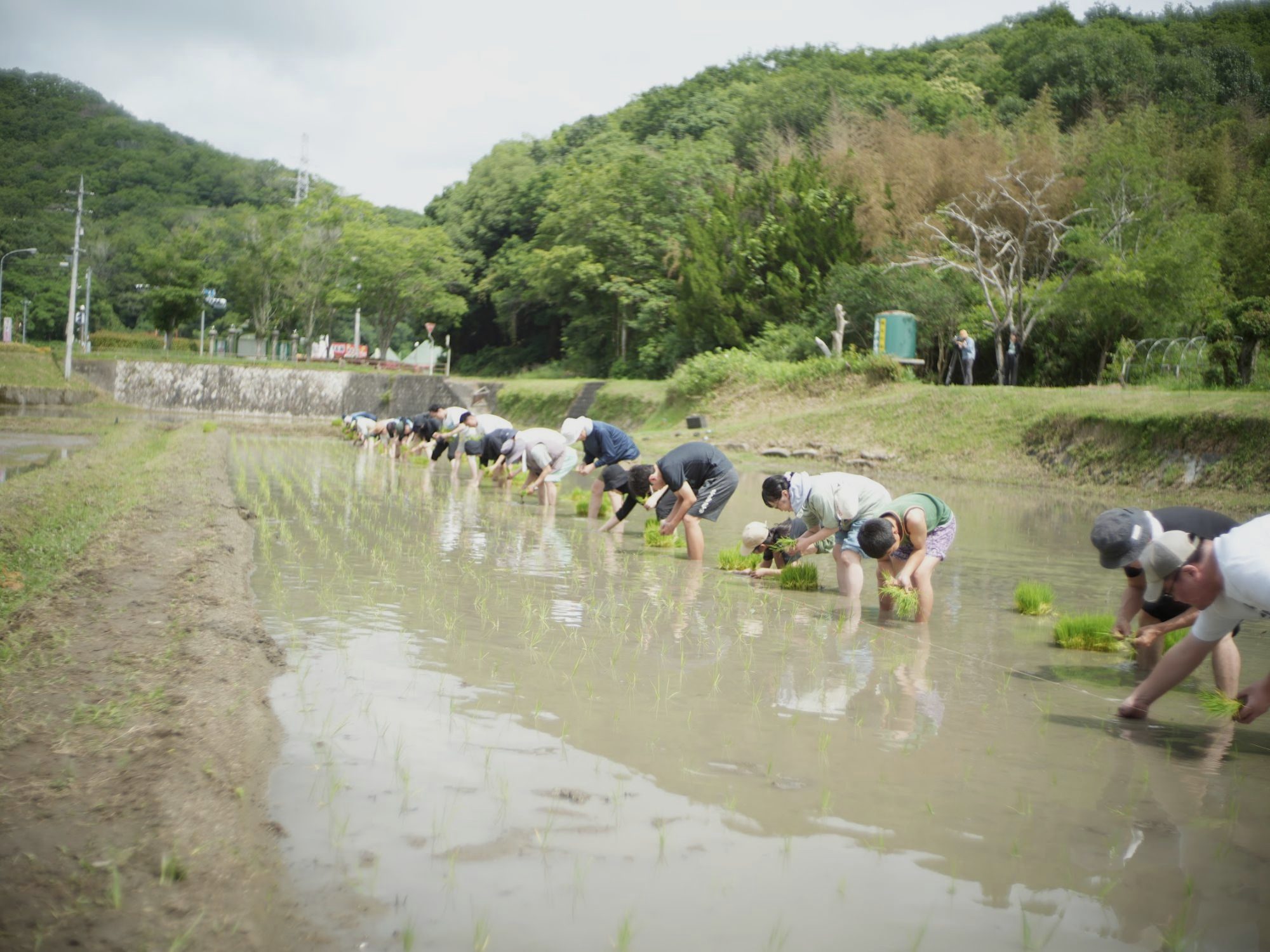
The brewery is small. The head of the house, the toji, the brewers, and the farmers who grow the Omachi in Karube — the same faces, year after year, through the same season. The sake is made by all of them, not by any one.