Toshimori Shuzo OKAYAMA, JAPAN — SINCE 1868
Sake begins with rice. Ours begins with Omachi.
Toshimori Shuzo is a family-run sake brewery founded in 1868 in Karube, Akaiwa — a small farming village in Okayama, western Japan. This land is the home of Omachi, the ancestral variety of modern sake rice. We brew only here, with the rice this soil grows.
Omachi, the phantom rice
Discovered in 1851 near Okayama, Omachi is the oldest pure sake rice still in cultivation — the ancestor of famed varieties such as Yamada Nishiki. Its large grain and soft, starchy heart yield a depth of flavor that brewers have prized for over a century. In the early Showa era it was said that no sake could win the national appraisals unless it was brewed from Omachi.
But Omachi is an unforgiving crop. The stalks grow nearly 1.8 meters tall and fall easily in wind; the plant is fragile against pests and disease. As postwar agriculture mechanized, farmers abandoned it, and the variety nearly vanished — at its lowest, only six hectares remained in all of Japan. People called it maboroshi no kome: the phantom rice.
The revival
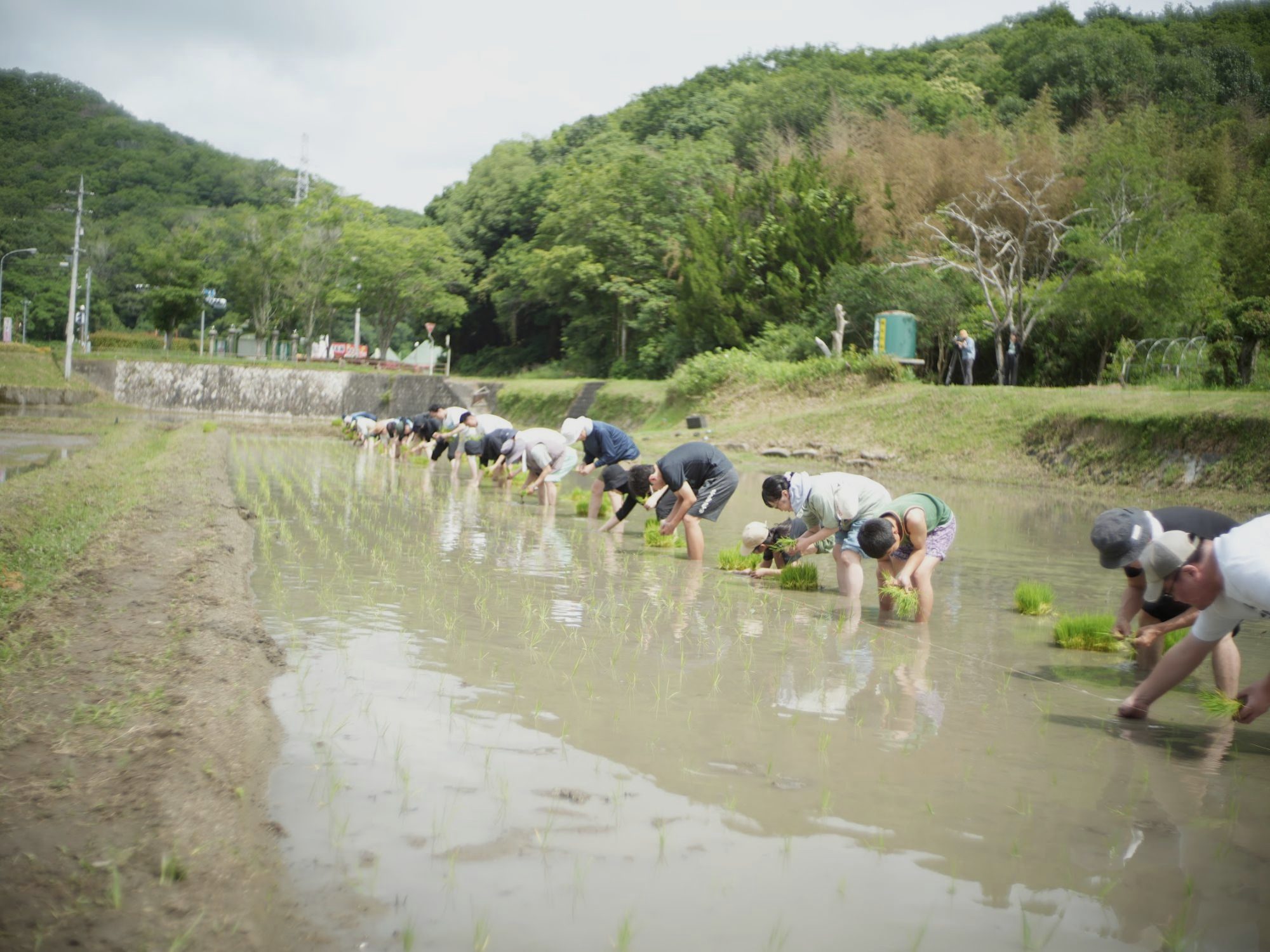
In the early 1970s, fourth-generation brewery head Tadayoshi Toshimori resolved to bring the phantom rice back to the fields of Karube. Farmers had every reason to refuse: Omachi demanded organic fertilizer, no pesticides, and endless hands-on care. So the brewery carried the risk itself, guaranteeing the farmers' income and pledging to buy every harvest.
One by one, growers joined. In 1982 a rice-improvement council was formed — brewery, farmers, agricultural cooperative and local government working as one. Two years later, a daiginjo brewed from revived Karube Omachi won the gold prize at Japan's National New Sake Appraisal. That sake was named Akaiwa Omachi.
Today Omachi is grown again across Japan, sought after by craft brewers nationwide. It began here, in these paddies, with these farmers. We are the brewery entrusted with their rice.
Brewing in Bizen ware
Before wooden vats appeared five centuries ago, sake was brewed in earthenware pots. In 1995 we returned to that origin: master potter Togaku Mori entrusted us with 500-liter pots of unglazed Bizen ware, fired for sixty days in a 53-meter kiln from local Inbe clay. The sake fermented in them — mellow acidity entwined with the umami of Omachi — is called Tenkabito.
Recognition
- Trophy, SAKE Division — International Wine Challenge (IWC)
- Platinum Prize — Kura Master, France
- Gold Prize — Japan's National New Sake Appraisal, numerous years since 1984
- Top 25, three consecutive years — Cornucopia, Whistler, Canada
- Top 100, two consecutive years — Vancouver Magazine International Wine Awards
Visit & contact
| Brewery | Toshimori Shuzo Co., Ltd. |
|---|---|
| Address | 762-1 Nishikarube, Akaiwa, Okayama 701-2225, Japan |
| Founded | 1868 |
| Brands | Sake Hitosuji / Akaiwa Omachi / Tenkabito / Kibiyoshi |
| hitosuji@sakehitosuji.co.jp | |
| Tel | +81-86-957-3117 (Mon–Sat, 8:00–17:00 JST) |
Our online store ships within Japan (Japanese language only). For inquiries about international availability, please contact us by e-mail.
Please enjoy sake responsibly. The legal drinking age in Japan is 20.